


Amy Williams: The British Skeleton Champion Who Made History
Introduction
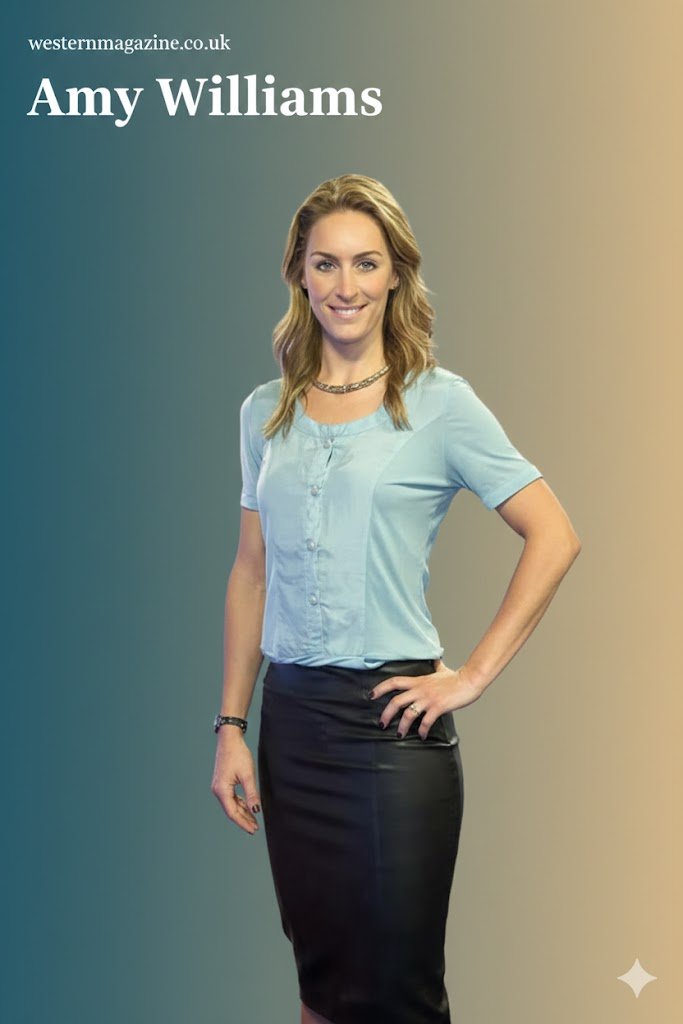
Amy Williams, MBE, is a name that will forever be synonymous with British skeleton racing and the 2010 Winter Olympics in Vancouver. Her gold medal victory in the women’s skeleton event was a momentous achievement not just for her, but for British sport as a whole. Williams’s victory was the first individual gold medal for Great Britain at the Winter Games in 30 years, and it marked the country’s return to prominence in winter sports.
This article chronicles Amy Williams’s journey from an enthusiastic athlete with no experience in winter sports to an Olympic gold medalist, exploring her early years, her rise through the skeleton racing ranks, her historic Olympic win, and her life after retiring from competitive sport.
Amy Williams Early Life and Education
@Amy Williams was born on September 29, 1982, in Cambridge, England. Raised in Bath, Somerset, she was introduced to sports at a young age. Her father, a chemistry professor at the University of Bath, and her mother, a midwife, fostered a nurturing environment where athletic pursuits were encouraged. Williams attended Hayesfield Girls’ School and later the University of Bath, where she studied sports science.
From a young age, Williams showed promise in athletics, particularly in the 400-meter sprint. Her sprinting background, which provided her with a natural explosive start, would prove vital in her future skeleton racing career. However, it was not until later in her academic life that Williams was introduced to the sport that would make her famous: skeleton racing.
Amy Williams Discovering Skeleton Racing
Amy’s introduction to skeleton came by chance while she was studying at university. In 2002, Williams participated in a skeleton taster session and immediately felt a spark for the sport. Skeleton racing, which involves athletes racing head-first down an icy track at high speeds on a small sled, requires a unique combination of strength, speed, and mental toughness — qualities that Williams possessed in abundance.
Despite the sport being relatively unknown in the UK, Williams’s passion and determination quickly set her apart. Skeleton, at the time, lacked the infrastructure and ice tracks that countries like Germany and Canada had, so British athletes had to train on push-start tracks and travel abroad for proper ice training. Nonetheless, Williams committed herself to the challenge, joining the British Skeleton development programme.
Amy Williams Rising Through the Ranks
In her early years, Williams competed in various national and international events. Her initial years of training were marked by rapid improvement, and by 2005, she won a silver medal at the Winter Universiade (World University Games). This was her first major international podium finish and demonstrated her potential in the sport. Over the next few years, she continued to develop, competing in the World Cup circuit and the World Championships.
In 2009, Williams achieved a major milestone in her career, winning a silver medal at the World Championships in Lake Placid, USA. This performance elevated her profile, and her place on the British team for the 2010 Winter Olympics was secured. With her experience and consistent results, Williams was now seen as a strong contender for an Olympic medal.
The 2010 Winter Olympics: Amy Williams Historic Gold Medal
Preparation and Expectations
Heading into the 2010 Winter Olympics in Vancouver, Williams had never won a World Cup title, but she was known for her consistency and her ability to produce fast runs under pressure. She was mentally prepared for the challenge of competing on the biggest stage of her career. Her preparation focused on improving her start time, a crucial aspect in skeleton racing, as well as refining her sled control and increasing her speed on the track.
Williams’s start was one of the most powerful among all skeleton athletes, thanks to her background as a sprinter. This gave her a significant edge, particularly in the early part of the race when fractions of a second could mean the difference between winning and losing.
Vancouver 2010: Gold Medal Performance
The 2010 Winter Olympics was a watershed moment in Amy Williams’s career. She competed in the women’s skeleton event, where she delivered an outstanding performance. Over the course of the four runs, Williams exhibited flawless technique, control, and courage. Her first and third runs set new track records, and she finished with a cumulative time of 3:35.64, more than half a second ahead of her closest competitor, Kerstin Szymkowiak from Germany.
This victory was historic. Williams became the first British woman to win an individual gold medal in winter sports since 1952, and it was Great Britain’s first individual gold medal at a Winter Olympics in 30 years. Her victory was not only a personal triumph but also a significant moment for British winter sports, which had been struggling to gain recognition and success on the world stage.
Legacy and Impact
A National Hero
Amy Williams’s gold medal was a landmark achievement, not just for her but for British sport. Her victory sparked widespread interest in skeleton racing in the UK, a sport that had been relatively unknown to the general public prior to her triumph. Her success was celebrated across the nation, and she became a role model for young athletes, particularly women, who now saw skeleton as a viable career path.
Williams’s achievement in Vancouver also helped to raise the profile of British winter sports. It was a testament to the power of determination, as Williams had overcome numerous obstacles, including limited access to training facilities, to reach the pinnacle of her sport.
Post-Olympic Career
After her Olympic success, Williams continued to be involved in the sport, but her body began to feel the toll of years of intense competition. In 2012, she announced her retirement from competitive skeleton racing, opting to pursue other opportunities.
Following her retirement, Williams transitioned into a successful career in the media. She became a television presenter, appearing on shows such as BBC’s Ski Sunday and The Gadget Show. Her engaging personality and experience as an elite athlete made her a natural in front of the camera.
In addition to her broadcasting career, Williams became a sought-after motivational speaker, delivering talks on subjects such as leadership, resilience, and overcoming adversity. She used her personal story of triumph and perseverance to inspire audiences in the corporate world and beyond. Williams’s motivational speaking has allowed her to share her message of determination with thousands of people, helping others find their own paths to success.
Amy Williams Personal Life
In 2015, Amy Williams married her partner, Craig Ham, and the couple has children. Outside of her career in broadcasting, Williams enjoys painting, outdoor activities, and spending time with her family. She continues to advocate for women in sport and remains a prominent figure in British sporting culture.
Conclusion
Amy Williams’s journey from university student to Olympic champion is a story of perseverance, resilience, and hard work. Her victory in the 2010 Winter Olympics was not just a personal triumph, but also a defining moment for British winter sports. Williams’s performance in Vancouver proved that with dedication and determination, even athletes from countries with limited access to winter sports facilities can rise to the top.
Her success has left an indelible mark on the sport of skeleton, inspiring a new generation of athletes to pursue the sport and break barriers. Her achievements in the media and motivational speaking further cement her status as an inspiring figure, not only in the world of sport but also in broader society.
Amy Williams is not just an Olympic gold medalist; she is a symbol of what can be achieved with hard work, passion, and a never-give-up attitude.