











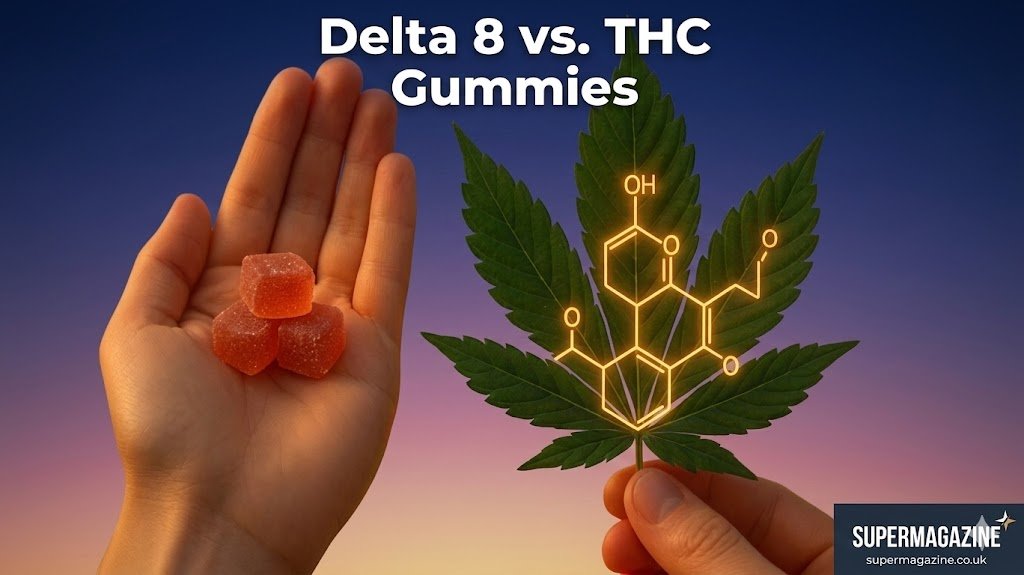
Delta 8 vs. THC Gummies: A Complete Guide to Differences, Effects, Benefits, and Safety
Introduction
Delta 8 vs. THC Gummies Cannabis edibles have become one of the fastest‑growing categories in the cannabis market, and gummies are among the most popular forms. These chewable products offer a convenient, discreet, and flavorful way to consume cannabinoids without smoking or vaping. Two types of gummies frequently discussed in the cannabis world are Delta 8 gummies and THC gummies, which typically refer to gummies infused with Delta‑9 THC, the primary psychoactive compound in cannabis.
Although Delta 8 and Delta‑9 THC are chemically similar and both can produce psychoactive effects, they differ in potency, experience, legality, and safety considerations. Many consumers are curious about how these products compare, especially as Delta 8 products have gained popularity in regions where traditional cannabis remains restricted.
Understanding the differences between Delta 8 gummies and THC gummies is essential for anyone exploring cannabis edibles. From how these cannabinoids interact with the body to how strong their effects may be, each option offers a distinct experience. This article provides a complete overview of Delta 8 and THC gummies, including their chemistry, effects, benefits, risks, legal status, and responsible usage.
Understanding Cannabinoids and the Cannabis Plant
Cannabis plants contain hundreds of chemical compounds, many of which are known as cannabinoids. These compounds interact with the body’s endocannabinoid system, a complex network of receptors that helps regulate functions such as mood, appetite, sleep, memory, and pain perception.
Two of the most well‑known cannabinoids are Delta‑9 tetrahydrocannabinol (Delta‑9 THC) and Delta‑8 tetrahydrocannabinol (Delta‑8 THC). Delta‑9 THC is the primary psychoactive component in marijuana and has been responsible for the classic cannabis “high” for centuries. Delta‑8 THC, on the other hand, is a closely related compound that occurs naturally in smaller amounts.
Both compounds interact with CB1 receptors in the brain and nervous system, which is why they can alter mood and perception. However, the strength of this interaction differs slightly due to their molecular structures. Even a small change in chemical structure can significantly influence how strongly a compound binds to receptors in the body.
This subtle difference is what makes Delta‑8 THC generally milder than Delta‑9 THC while still producing noticeable psychoactive effects.
What Are Delta 8 vs. THC Gummies?
THC gummies are edible candies infused with tetrahydrocannabinol extracted from cannabis plants. These gummies are typically made by blending cannabis oil or THC distillate into a gummy candy base made from ingredients such as gelatin or pectin, sugar, flavoring, and coloring.
Once infused, each gummy contains a measured dose of THC, allowing users to consume cannabis in a controlled and predictable way. This precise dosing is one reason gummies have become popular among both recreational and medical cannabis users.
THC gummies are widely sold in licensed cannabis dispensaries in regions where marijuana is legal. They are available in a wide range of flavors, shapes, and strengths, allowing consumers to select products that match their preferences and tolerance levels.
One of the biggest advantages of THC gummies is their convenience. They are easy to carry, require no preparation, and can be consumed discreetly without producing smoke or odor. This makes them appealing to people who prefer not to inhale cannabis.
What Are Delta 8 Gummies?
Delta 8 gummies are edible products infused with Delta‑8 THC, a cannabinoid closely related to Delta‑9 THC. Because Delta‑8 occurs naturally in very small amounts in cannabis plants, most commercial Delta‑8 products are produced by converting cannabidiol (CBD) derived from hemp into Delta‑8 THC through chemical processes.
These gummies look and taste similar to traditional THC gummies but typically produce milder psychoactive effects. Many users describe Delta‑8 gummies as offering a more gentle and clear‑headed experience compared to the stronger effects associated with Delta‑9 THC.
Delta‑8 gummies have become widely available in many markets due to legal loopholes that allowed hemp‑derived cannabinoids to be sold under certain regulations. As a result, they have appeared not only in cannabis dispensaries but also in vape shops, online stores, and other retail environments.
Despite their growing popularity, Delta‑8 products remain controversial because regulatory standards vary widely, and not all products undergo the same level of testing as traditional cannabis products.
Chemical Differences Between Delta 8 and Delta 9 THC
Although Delta‑8 and Delta‑9 THC share the same chemical formula, their structures differ slightly. The difference lies in the placement of a double bond in the carbon chain of the molecule.
In Delta‑9 THC, the double bond occurs on the ninth carbon atom, while in Delta‑8 THC it occurs on the eighth carbon atom. This small structural difference affects how strongly each compound binds to cannabinoid receptors in the brain.
Delta‑9 THC binds more strongly to CB1 receptors, which is why it produces more intense psychoactive effects. Delta‑8 THC binds more weakly, resulting in a milder and often smoother experience.
Even though the difference may seem minor from a chemical perspective, it significantly influences how the body responds to each compound.
How Edible Gummies Affect the Body Delta 8 vs. THC Gummies
Whether a person consumes Delta‑8 or Delta‑9 THC gummies, the digestive process plays an important role in how the cannabinoids affect the body.
When someone eats a gummy, the cannabinoids pass through the stomach and are absorbed in the intestines before being processed by the liver. During this process, THC is converted into a compound called 11‑hydroxy‑THC, which can be more potent than inhaled THC.
Because digestion takes time, the effects of cannabis edibles typically take longer to appear compared to smoking or vaping. Most people begin to feel effects between thirty minutes and two hours after consumption.
Once the effects begin, they can last several hours. Many users experience the peak effects between two and four hours after ingestion, with lingering sensations that may continue for up to eight hours or longer.
Effects of THC Gummies
THC gummies are known for producing a range of psychoactive and physical effects. These effects can vary depending on dosage, individual tolerance, and the environment in which the gummies are consumed.
Many people report feelings of euphoria, relaxation, and heightened sensory perception after consuming THC gummies. Colors, sounds, and textures may feel more vivid or intense.
THC also influences appetite, often increasing hunger and leading to what is commonly known as “the munchies.” Some users also experience enhanced creativity or introspective thinking during the experience.
However, THC can also impair memory, concentration, and reaction time. This is why activities such as driving should always be avoided after consuming THC edibles.
Effects of Delta 8 Gummies
Delta‑8 gummies produce many of the same types of effects as THC gummies, but the intensity is usually lower. Users often describe the Delta‑8 experience as more balanced and less overwhelming.
Common effects include mild euphoria, relaxation, improved mood, and light sedation. Many people find Delta‑8 gummies helpful for unwinding after a long day without feeling heavily intoxicated.
Some users also report that Delta‑8 causes less anxiety or paranoia than Delta‑9 THC. While this may make Delta‑8 appealing to individuals who are sensitive to THC, reactions can vary widely between people.
Despite being milder, Delta‑8 gummies are still psychoactive and should be used responsibly.
Delta 8 vs. THC Gummies Comparing Potency
One of the most important differences between Delta‑8 gummies and THC gummies is potency.
Delta‑9 THC is generally considered significantly stronger than Delta‑8 THC on a milligram‑for‑milligram basis. As a result, a small dose of Delta‑9 THC can produce stronger effects than the same dose of Delta‑8 THC.
Because of this difference, beginners may find Delta‑8 gummies easier to manage. However, higher doses of Delta‑8 can still produce strong psychoactive effects.
Choosing the appropriate dose depends on a variety of factors, including body weight, metabolism, and previous cannabis experience.
Delta 8 vs. THC Gummies Benefits and Potential Uses
Both Delta‑8 and Delta‑9 THC gummies are sometimes used for similar purposes. Many people use cannabis edibles for relaxation, stress reduction, and recreational enjoyment.
Some individuals also use cannabis gummies for potential therapeutic benefits. These may include relief from chronic pain, support for sleep problems, and reduction of nausea.
THC has been studied for its ability to help with conditions such as chemotherapy‑related nausea and appetite loss. Meanwhile, some users report that Delta‑8 offers a gentler form of symptom relief.
It is important to note that research on cannabinoids is still developing, and results can vary depending on the individual.
Risks and Side Effects
Despite their popularity, both Delta‑8 and THC gummies carry potential risks.
Overconsumption is one of the most common problems with edibles. Because the effects take time to appear, people may accidentally consume too much, leading to unpleasant experiences such as dizziness, nausea, or anxiety.
THC can also impair coordination and judgment. This can increase the risk of accidents if individuals drive or operate machinery after consuming cannabis.
Another major concern is accidental ingestion by children or pets. Gummies often resemble regular candy, which can lead to confusion if they are not stored safely.
Proper storage in child‑resistant containers and keeping cannabis products out of reach are essential safety practices.
Legal Status Delta 8 vs. THC Gummies
The legal status of Delta‑8 and THC gummies varies widely depending on the country and region.
In the United States, marijuana‑derived Delta‑9 THC products are federally illegal but legal for recreational or medical use in many states. These products are usually sold through licensed dispensaries.
Delta‑8 THC exists in a more complicated legal environment. Because many Delta‑8 products are derived from hemp, they were initially interpreted as legal under certain federal regulations. However, several states have since moved to restrict or ban Delta‑8 products.
Consumers should always check local laws before purchasing or using any cannabis product.
Responsible Consumption Delta 8 vs. THC Gummies
Responsible use of cannabis edibles begins with understanding dosage. Beginners should start with a small dose and wait several hours to evaluate the effects before consuming more.
Using cannabis in a safe environment is also important. People should avoid mixing cannabis with alcohol or other substances that may intensify its effects.
Individuals who are pregnant, taking certain medications, or dealing with specific medical conditions should consult healthcare professionals before using cannabis products.
Education and awareness are key to reducing risks and ensuring a safe experience.
The Future of Cannabis Edibles
The market for cannabis edibles continues to grow as legalization spreads and consumer interest increases. Gummies are likely to remain one of the most popular formats due to their convenience, taste, and precise dosing.
Researchers and manufacturers are exploring new technologies that may improve edible cannabis products. These innovations include faster‑acting formulas, improved flavor options, and better methods for controlling dosage.
As regulations evolve, stricter testing and labeling standards may also improve product safety and consistency.
Conclusion
Delta‑8 gummies and THC gummies represent two different approaches to cannabis edibles. While both contain psychoactive cannabinoids, they differ in potency, experience, legality, and consumer appeal.
Delta‑9 THC gummies typically produce stronger effects and are widely associated with traditional cannabis experiences. Delta‑8 gummies, on the other hand, offer a milder alternative that some users find more manageable.
Understanding the differences between these products allows consumers to make informed decisions about which option best suits their needs. As with any cannabis product, responsible use, proper dosing, and awareness of local laws are essential for a safe and positive experience.