











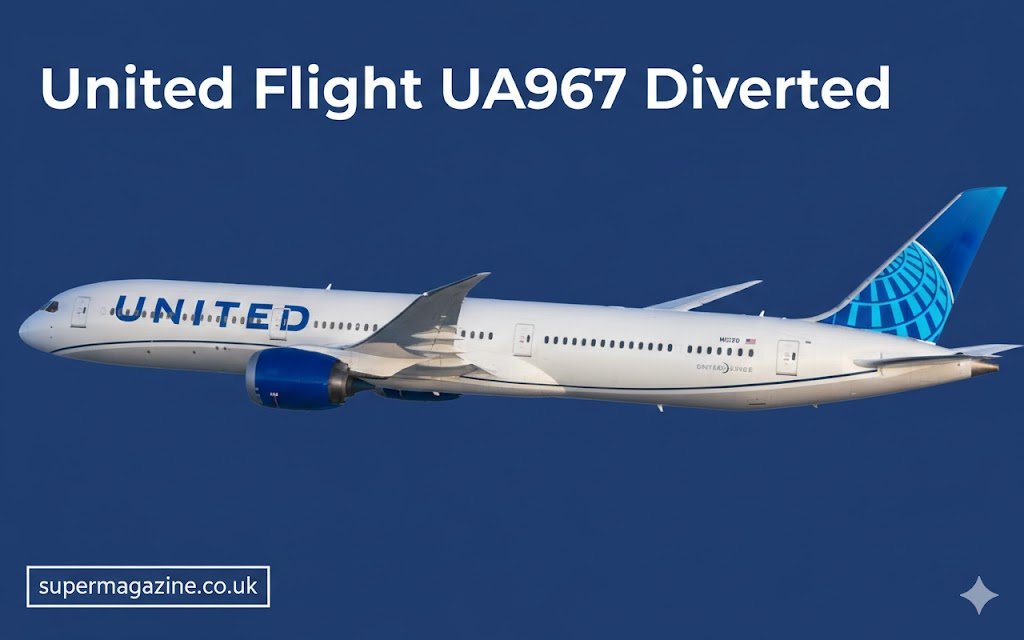
United Flight UA967 Diverted: Causes & Impact
On August 24, 2025, United Flight UA967 Diverted experienced an unexpected and significant disruption when it was diverted mid-flight, creating a ripple effect for passengers and the airline. What should have been a routine flight from Naples, Italy (NAP) to Newark Liberty International Airport (EWR) in the United States became a journey marked by delay, diversion, and inconvenience. This article covers every aspect of the incident, from the mechanical issue that triggered the diversion to the impact on passengers and the aviation safety practices that led to the decision to land in St. John’s, Newfoundland, Canada.
Introduction to United Flight UA967 Diverted
United Flight UA967 Diverted operates as a transatlantic flight, departing from Naples International Airport in Italy and arriving at Newark Liberty International Airport in the United States. The aircraft used for this flight was a Boeing 767-300ER, known for its long-haul capacity. The flight is typically scheduled to last about 8 to 9 hours, covering the distance between Europe and the United States.
However, the flight on August 24, 2025, deviated from the norm when it was forced to divert to St. John’s International Airport (YYT) in Newfoundland, Canada. Passengers were faced with a sudden, unexpected landing, causing confusion, frustration, and inconvenience. The incident sparked significant interest among travelers and aviation enthusiasts searching for details on the reasons behind the diversion and how it impacted passengers.
The Timeline of Events United Flight UA967 Diverted
Delayed Departure from Naples
The journey began on a problematic note. United Flight UA967 Diverted was initially delayed by over 3 hours before departing from Naples International Airport. The flight was scheduled for departure at around 2:30 PM CEST, but due to operational delays, it left at approximately 5:13 PM CEST. Passengers were forced to wait on the tarmac, and the delay contributed to the growing tension among those onboard.
The delay may have been linked to ground handling issues or weather delays. However, it was only the beginning of a longer-than-expected journey for everyone onboard.
Mid-Flight Diversion
Approximately seven hours into the flight, as the aircraft was cruising over the North Atlantic, the crew detected an issue onboard. According to various sources, the flight crew identified a burning smell in the cabin — a typical early warning sign of a mechanical issue. Passengers reported that the odor was associated with electrical components or the ventilation system.
At this point, the pilots made the crucial decision to divert the flight for safety reasons. The Boeing 767 was rerouted and set its course toward St. John’s International Airport (YYT) in Newfoundland, Canada, a common diversion airport for flights over the North Atlantic.
The diversion was made out of caution, as the airline’s first priority is always passenger safety. According to aviation experts, even small signs of potential mechanical failure — especially on long-haul flights crossing over remote oceanic areas — can prompt a diversion to the nearest available airport.
Landing in St. John’s, Newfoundland
The aircraft touched down at St. John’s International Airport (YYT) at around 8:25 PM local time — roughly three hours after the diversion. Passengers onboard were relieved to land safely, but the situation was far from resolved.
St. John’s International Airport is located on the easternmost tip of Canada and is strategically located for emergency diversions of transatlantic flights. The airport is well-equipped with emergency services, medical response, and the infrastructure necessary to handle such situations.
Although this diversion was unfortunate for the passengers, it illustrates the importance of planning for emergency landing fields when flights cross vast stretches of ocean. When an aircraft encounters an emergency, proximity to a suitable diversion point becomes a critical factor in ensuring the safety of everyone on board.
Cause of the Diversion: A Mechanical Issue
United Airlines confirmed that the reason for the diversion of UA967 was a mechanical issue that had been detected in flight. While the airline did not provide full technical details, various unofficial reports and analyses suggest that the burning smell onboard was related to electrical or ventilation systems in the aircraft. Some sources indicated that the aircraft might have experienced an issue with its exhaust fan or another critical system component that posed a potential safety risk.
In aviation, diversions like these are often precautionary. Flight crews are trained to err on the side of caution and to land at the nearest airport if there is any risk to the safety of the aircraft or passengers. Given the nature of the issue, it was clear that continuing the flight to Newark would have been risky, and landing in St. John’s was the safest decision.
United Flight UA967 Diverted Passenger Impact: Delays and Inconvenience
The diversion caused major inconvenience for passengers who had been hoping for a straightforward flight to Newark. The situation affected several aspects of their journey:
1. Replacement Aircraft
After landing in St. John’s, passengers were informed that the original aircraft could not continue to Newark. United Airlines dispatched a replacement Boeing 767 from another location to continue the flight. This meant that passengers would be required to disembark and wait for a new aircraft to carry them to Newark.
2. Overnight Delay
Given the circumstances, passengers were forced to remain in Canada overnight. This was due to the logistics of getting a replacement aircraft into position, refueling, and preparing for the long flight to Newark. The original flight was supposed to arrive at Newark the next morning; instead, passengers faced an extended wait, with many booking overnight accommodations, meals, and arranging alternative transport for the next morning.
3. Missed Connections
One of the biggest issues for passengers was the missed connections. Many travelers had booked onward flights from Newark, and the delay caused significant disruptions to their travel plans. The 10-hour delay led to passengers missing their connections and had them scrambling to rebook alternative flights.
Safety Protocols and Aviation Practices
While the diversion of United Flight UA967 Diverted was undoubtedly inconvenient, it illustrates the important safety protocols that are in place for all commercial flights. In the aviation industry, there is a clear emphasis on passenger safety, and every decision made in a diversion scenario is guided by the best interest of those aboard.
Aviation experts argue that diversions are a standard safety procedure, even if the issue appears minor. The first priority of pilots and airlines is to ensure that the aircraft reaches a suitable airport for repairs rather than risk the well-being of passengers and crew by continuing the journey.
Passenger Rights and Compensation: EU261
Because @United Flight UA967 Diverted originated in Italy, an EU country, passengers may be entitled to compensation under EU Regulation 261/2004 (EU261), a law that protects passengers in case of long delays, cancellations, and diversions. If the delay was caused by factors within the airline’s control — such as a mechanical issue — passengers could be eligible for compensation.
Under EU261, passengers are entitled to:
- Up to €600 (roughly $700) in compensation for delays exceeding 3 hours for long-haul flights.
- Meals, accommodations, and transportation for passengers stranded overnight.
- Rebooking and rerouting to their final destination.
However, compensation may not be applicable if the cause of the diversion is determined to be an extraordinary circumstance, such as extreme weather. Passengers affected by the diversion should retain their boarding passes, receipts, and other travel documents to file a compensation claim.
Conclusion: The Diversion of United Flight UA967 Diverted
The diversion of United Flight UA967 Diverted serves as a reminder that aviation safety is the foremost priority, and that diversions — though inconvenient — are a necessary part of the system designed to ensure the safety of passengers and crew. While United Airlines did not provide specific details about the mechanical issue that led to the diversion, the decision to land at St. John’s in Canada was in line with standard aviation practices.
For passengers, the diversion created a significant disruption to their travel plans, resulting in delays, missed connections, and the inconvenience of an overnight stay in Canada. However, the situation could have been far worse had the airline not made the decision to divert the flight and prioritize safety.
The incident underscores the importance of travel insurance, as well as understanding passenger rights under laws like EU261, which offer some recourse for affected travelers. As the aviation industry continues to focus on safety, passengers can rest assured that airlines are equipped to handle emergency situations, even when they lead to unexpected detours.